
Dear newly TEPs, a big congratulations for entering the world of being a trainee educational psychologist! No doubt it has been a tough journey of applications, interviews and gaining relevant experience for you to get to this point and you should be proud of yourself for getting this far.
As a soon to be second year TEP, I wanted to pass on a few top tips that have helped me in navigating my first year as a TEP. I’d also like to say a big thank you to my Twitter and Blue Sky EP/TEP connections who have shared their ideas towards this blog too 🙂
Just a quick note to say that each university course and everyone’s life, finances, family and responsibilities are very different, so some of what I say might not apply to you but hopefully you’ll find some of this useful.

Tip 1: Find your TEP Tribe and work as a team
This one for me is the big one. TEP life can be overwhelming and stressful and so having a good support network is really important. The competition involved in getting a place on the doctorate is OVER and you now have the privilege of sharing a space with lots of knowledgable trainees who are passionate about educational psychology just like you and will be navigating the same doctorate rollercoaster. Learn from them, have fun with them, complain about work and cry with them when needed. Enjoy the opportunity to make some friends who actually understand what your training is all about because chances are most of your friends will say ‘What’s an EP?’.
Working together where you can will save you time, energy and is also much more enjoyable. As one wise EP from Blue Sky shared with me when I asked about ideas for this blog: “The course, and the profession, is about collaboration”
Things my cohort did to help each other out:
- Cohort Whatsapp group: From day 1, we set up a Whatsapp group with a ‘no silly questions’ mantra to help each other out. Ours now also doubles up as a ‘tell someone I’m stuck in traffic’ / cute dogs / funny memes and children hitting milestones celebration space too, which I enjoy.
- Make a shared online resource space: This has been advice I’ve heard from lots of TEPs online too. With many TEPs previously having been assistant EPs, SENCOs or coming from other specialist areas, lots of us came to the course already with resources that were useful for practice. We shared EVERYTHING we already had that we could on a Sharepoint area and its created such a lovely community where we all help each other be better and save money and time making things.
- Go to the pub: (Disclaimer: I don’t drink, but I still go to the pub!) We have made the effort to celebrate all of our hand in milestones, birthdays, christmas (any excuse really!) to get to know each other and make the most of the student union drinks deals. You tend to have more time together in university in first year so my advice is make the most of that and socialise!
- Move around in uni sessions: Try and sit next to new faces each session in uni when you first start – as a big cohort we found this regular switch up helpful for cohesiveness and getting to know each other. It also means your discussions can be explored from new angles, experiences and perspectives, which I’ve found valuable. A shared tea and communal baking rota can also go a long way for wellbeing.
- Co-working: Other trainees have shared with me on social media that they created online spaces to co-work or body double to get assignments finished. Myself and fellow TEPs have also booked library rooms together when deadlines are due and motivation is low to spur each other on.

Tip 2: Get organised with your notes and journals
On my course we get all our pre-reading electronically. I personally used Notability to read and highlight journals and then later switched to OneNote to download teaching powerpoint slides and annotate the sessions on my computer as I went along. Having all your notes in one place (preferably on a cloud space) is always a good idea!.
My top tip would be find out from other TEPs what the university offer in terms of software. My uni gave us access to Microsoft365 so OneNote was most people’s first choice. I used summer/initial reading weeks to set up all my course uni folders and dated folders to download reading into so I didn’t lose track of reading that was coming in at different times via email from different tutors.
Referencing: Don’t do this by hand…it takes a long time! I have personally used Mendeley and EndNote this year and prefer Endnote’s usability. Our university offered this as free software (thanks!). Endnote and Mendeley integrate with Microsoft Word so you can set it up, click a button and add a reference and it will automatically make your bibliography for you and respond to changes you make without having to manually update it all. You can also make folders of different journal papers and categorise them as you wish which is really helpful when doing a literature review. It is definitely worth asking your new library staff what your university uses and getting confident in this early on as it has saved me HOURS doing my literature review and writing assignments!
Resources: Something I also did personally in addition to course unit folders for university lectures was make topic folders for all useful resources shared by tutors on my computer. I did this, knowing that when I was qualified, I would want to search e.g. EBSA resources not 16.5.24 Session 3. Now when someone says, ‘Do you have a checklist for…?’ I can find it much quicker.

Tip 3: Invest in things that make life easier
I appreciate that everyone’s financial situation is different, so if you’re not able to buy new things then that is ok. I personally found that my healthy cooking, sleeping routines and general wellbeing usually disappear when I’m stressed or in a new job, so I saved up a bit of money before I started and bought a few things in the Black Friday sale that have helped me maintain my wellbeing over year one as a TEP.
- Appliances for easy cooking: I love my multicooker and soup maker that help me keep on track eating well and saving money by batch cooking my lunches for university and placement. Having a way to cook easy, healthy meals quickly after a long day has really taken a big mental weight off my mind this year.
- A second screen: A second screen to use dual screen mode on my laptop has been really useful for me when referencing and reading journals on one screen whilst writing on another. I actually found one for £20 in a charity shop so its definitely worth having a look around for second hand one if you can.
- Sitting/standing desk: I had this before the course but you can spend a lot of time in desk gremlin mode when its reading/assignment time. Having the option to stand/walk/under desk treadmill (this has been an impulse buy that i do not regret!) is great if you can afford it. My university also has a secret furniture room where as a student you can get old university furniture like desks, filing cabinets etc. for free. So if you need a new desk on a student budget its definitely worth investigating (not sure if other universities do this though!)
- Digital note taking devices : I was gifted a Rocketbook by my lovely team as a leaving present before I started the course. These reusable notepads let you write physical notes that you can then digitize by scanning them in on your phone. In uni, I take notes on my computer as it’s easier, but it’s a lot harder sometimes when you’re in schools/sat on the floor of a nursery and trying to take notes. Writing up handwritten notes takes a long time so do talk to your placement about what digital tools they use to make this quicker and think how you’d work best writing notes whilst doing observations or in consultations. If that is by hand, buy a clipboard or why not try a Rocketbook to save paper. If you have cash to spend and want to go fully digital, TEP friends have also recommended trying Remarkable, or other tablets like an iPad Pro with Apple Pencil etc. Remember to check out student discounts before you invest in bigger purchases though as Apple do good discounts for students!
Tip 4: Work/life balance
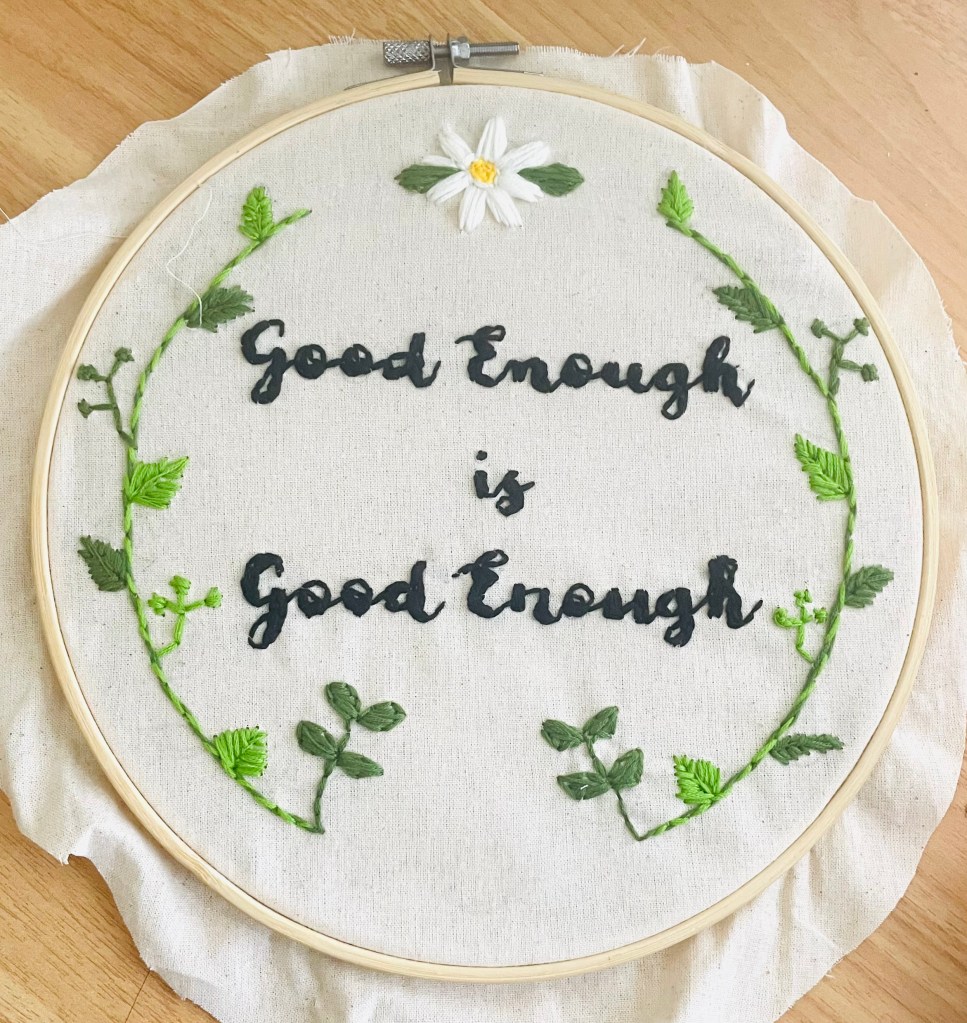
Work/life balance is really important and I personally was rubbish at this when I first started. For me, it has been a learning process from trying to do everything perfectly, to moving to a mantra of ‘good enough is good enough!’
There is always more reading to read, thinking to think and rewriting that can be done but you need to know when you have done work that is a good enough standard and when to take a break. Make sure you do give yourself the time to switch off and recharge so you can bring your full self back to studying/placement the next day.
- Find your best work time: Work on a schedule that works for you and gives you time with friends and family. Whether that’s early mornings, late nights, or 9-5, find your own work groove and embrace the flexibility of independent study days.
- Don’t compare yourself to others: I have learnt that everyone works at different paces and mine can take a little longer. I think about everything in a huge amount of detail and (often create work that doesn’t even exist when doing assignments!) and so it often takes me longer to write things than others but that’s just how my brain is and I’m embracing it and planning in extra thinking time.
- Team up: When tricky reading or a high volume of reading was given out, my TEP friends and I would either share reading between us and then share notes and feedback or both read the same article and then talk it through together to save time and brain space before the session.
- Ask for help: Life doesn’t always go to plan! Ask for extensions if you need them and tell university if your personal circumstances are making deadlines tricky. Tutors are there to help and I’ve had really positive experiences with my supervisors in managing personal circumstances along with the course.
- Find and maintain your personal joy: Keep doing your hobbies and finding joy where you can. Go for walks when your brain feels fried and make time for seeing friends. It is really important to avoid burnout so I still make time for my choir, crochet and painting when I need to unwind.
- Holiday ambiguity: Schedule in your holidays (and actually take them!) Make sure to have days where you fully switch off as it’s quite easy to ‘sort of work’ as a TEP.
- Front-load assignments: This tip does depends what kind of person you are and some of my friends like to work close to the deadline instead. I personally find it better and less stressful to get ahead and start assignments early when I have scope in order to take the pressure off later. Summer of year one is a great example as you can use it how you need, whether that be time to recharge and get away, or an opportunity to get some second year tasks ticked off if you can.
- Be prepared for assignment deadline pinch points: Make a plan of your deadlines and when they are coming. Start on things as soon as you can so there aren’t any surprises when things ramp up later in term! I’ve found that assignments have generally always taken me longer than I expected them to so add in some buffer room for unexpected workload.
- Juggle wisely and communicate between placement and university: You will have university assignments and placement work running alongside each other as a TEP. I personally found it useful to communicate from my initial meeting with my placement supervisor when I had university deadlines and other personal life things coming up. I also made sure my supervisor was clear what tasks or university observations I needed to get done on placement early on so we could plan ahead.

Tip 5: Connect with other EPs, TEPs and AEPs
Being a trainee you are afforded something that many EPs wish for…extra time to think, talk and share! Supervision with university tutors, placement supervisors and other trainees and assistants are all great spaces to learn. I set up informal peer supervision outside of university with EPs and TEPs I knew, but also am prone to a ‘please can you help me with this’ voice note as a form of supervision with my TEP friends.
You can use supervision for lots of things:
- Asking questions about what to do in casework
- Going through something new like assessments or consultation approaches together
- Managing workload or work/life balance
- Discussing social justice or EDI issues that occur on casework or in university
- Reflecting on how casework may have impacted you personally
- Reading or writing reports together and talking about writing style
- Asking for opportunities for shadowing
- Exploring different resources that your service has to use
- Attending training or helping your placement supervisor in writing training
- Talking about what other EPs or TEPs are reading
- Panicking about how to fill in research ethics applications (my personal favourite)
- Just generally having a mutual offload and update!
Social media and podcasts are another way you can connect with EPs from around the UK that I’ve found really valuable:
- Social Media: My first stop on social media would be to follow #twittereps (on X), and #edpsychs (on Blue Sky). I personally just followed lots of other EPs TEPs and AEPs and have made some great contacts this way. I always pick up new reading recommendations, training opportunities, networking events and interesting new publications from Twitter and Blue Sky. I’ve definitely got a reputation for saying ‘I was reading this thing on Twitter and…’ but it’s also definitely improved my work!
- Podcasts: With all your commute time to placement or university or just going for walks around the park, tap into the world of EP podcasts. Here are some I’m aware of: Agents of Hope, Conversations about Consultation, Drawing the Ideal Self, Ed Psych Bite, PsychBites, Thinking Time, TEP talks, Classroom Psychology
- Blogs/Youtube: Check out EPReachOut to keep up to date with new research and training on Youtube and Edpsy for blogs, jobs and events.
Bonus shout out also to my TEPICC team as another means of connecting with other TEPs around the UK. We are a group of TEPs promoting initiatives for cultural change and recruit new TEP members each year. If you’re interested in joining and linking up with TEPs across the UK, do drop me a line and I can link you in!

Tip 6: Discounts and finances
TEP bursary financial planning is tough and unfortunately is a reason many are unable to apply for the doctorate in the first place. Planning will look different for everyone depending on your circumstances but some tips other TEPs have shared with me that have helped them are:
- Get a finances spreadsheet going from day one to track your spending
- Make sure you find out dates for when your bursary is arriving (ours varied each month)
- Look at high yield savings account early to try to make your bursary stretch
- Utilise all the discounts you can!
Student discounts I have used are:
- Amazon Prime
- Spotify
- Deliveroo (free delivery!)
- Student Beans to search for codes in lots of different shops online and in store
- Adobe offer a student creative suite offer if you like to photoshop or design
Another great saving for lots of people is student council tax exemption costs. Check this out as soon as you enroll and make sure you have proof of being a student first!
Other things to think about to save money:
- Commuting and parking: I was all prepared for braving the bus to university, thinking it would be cheaper. It was however, after a quick chat with the carpark team, actually cheaper for me to drive and park at university as we get really discounted parking as postgrad students. Though this may not be the same everywhere, asking around about the cheapest parking, public transport or rail deals for students etc. can save you a tidy penny if you get organised early on. If you’re young enough check out student railcards and I know some students buy rail tickets in advance or carshare for university to save more.
- CPD: We have a budget for relevant CPD at my university so always worth asking if there is money to be utilised before paying for CPD yourself. When you’re on placement, ask your supervisor if your service is putting on any training you could observe or support with too.
- Printing: We get free printing as postgrads at my university so ask at the library before you shell out for printers and ink!
- Books: Go to the library, enjoy all the free books on offer. Scope out where you can also get free e-book loans. I didn’t realise until the end of the year that you can also request books and journals from the library if they don’t have them in. If all else fails and you want your own copy, try second hand places like Ebay or World of Books or organise a book swap with TEPs to save the pennies!
- Resources: Our university has a resource cupboard where you can book out assessment tools and your service will also have resources you can use as a trainee for free. You don’t need to spend money (like I did!) buying your own resources when you can borrow from university or your service.
Free money (sort of)
Tax Back: If you’ve worked part of the year and then become a full time student you should be eligible to claim back the tax you overpaid from April-August from HMRC.
Student loans: As well as tax rebates, some people are also eligible for a refund on student finance loan repayments if you have overpaid on these. This can help with a bump in finances across the year (though this one came later in the year for me).
Student bank accounts: Many banks also offer free money for creating a student account with them so do shop around come September! I went with Natwest and also got a free Taste card. Some others offer free rail cards for under 25s and other perks.
Tip 7: Focus on one step at a time
You WILL have imposter syndrome (I haven’t met a TEP or EP that doesn’t struggle with imposter syndrome yet) so embrace it!
Firstly, remember that everyone joins the doctorate at different ages and stages in their career and has individual strengths and weaknesses. Many of my TEP friends who hadn’t been assistant EPs were anxious they would be at a disadvantage but soon realised they had many other amazing skills to bring and soon plugged knowledge gaps through discussions and placement opportunities (don’t worry!). I also personally found working with qualified counsellors, social workers and experienced youth workers brought unique perspectives and a dynamic element to our university discussions.
Secondly, you’re a trainee….so by definition you’re not supposed to know it all yet and it is ok not to know things! Try to focus on your own journey and not compare yourself to others.
When times feel tougher, reach out and talk to friends and family for support because there will be highs and lows and that’s completely normal! Some mantras that I always try to keep in mind:
- Thinking time is just as important as writing time: If you spend all day working something out but only write two sentences then that is just as valuable (if not more!) if your thinking has shifted.
- It’s a marathon not a sprint: Pace yourself…there are no prizes for being perfect and you can only go as fast as you can go! Personally at my university, you submit your assignments, they are graded and then you amend them if there are corrections needed so it’s different to undergraduate study. Talk to Y2 TEPs at your university to find out how it works on your course.
- If you don’t know, ask: Ask Y1, 2 or 3 TEPs at your university, ask your supervisors in university or placement, ask Twitter or Blue Sky EPs, I guarantee you, someone knows the answer to your questions somewhere and TEPs and EPs are generally a lovely bunch.
- Good enough is still good enough!
….AND….A few useful things to get you started on your journey:
What even is an EP?: Parents/staff you work with or your friends and family might ask you…but what even is an educational psychologist? Check out this fabulous edpsy resource which explains it all really well (in multiple languages!)

The best way to eat an elephant (that’s the doctorate) is one bit at a time: I was inspired by a now qualified EP at Newcastle who wrote THIS BLOG about making your own doctorate elephant. I made my own TEP journey elephant so I could visually see my progress and I love colouring each chunk in every time I tick off an assignment hand in. There’s a free download link on the blog 🙂
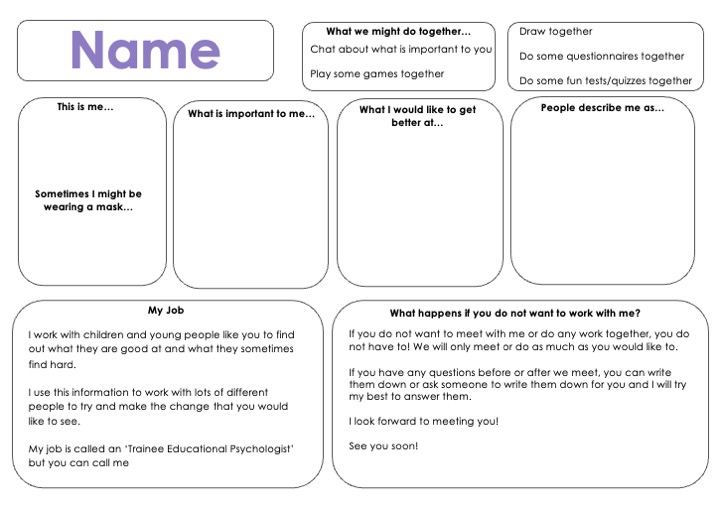
- One Page Profile: These are used now in a lot of EP services and if you follow Keith H on Twitter you will have definitely seen this fabulous template floating about. One Page profiles are a great way to share who you are with CYP, parents or even staff you’ll be working with. I was also inspired by Keith to make a One Page video on Powtoon if you want to up-level your OPP game!
Finally…
I wish you the best of luck, have fun, enjoy your first year as a TEP 🙂
If you’ve found this blog helpful or if you have any other tips you’d like to share for new trainees, please leave us a comment below!
6 responses to “Top Tips for New TEPs”
-
Hi,
Thank you for sharing these words of wisdom. They’re great (wish I’d had some of the to help me through my MSc). I’m planning to apply for the EP course this year and wondered whether you had any tips for the application process.
Many thanks,
Cat (SENDCo)
LikeLike
-
Hi Cat,
Thanks for your lovely feedback! I’m hoping to maybe look at this in a future blog so keep your eyes out for that. All uni courses are quite different in what they look for so definitely look at the courses you are interested in and attend the open evenings if you can to find out about the way they work.
Whilst you are a SENDco I definitely recommend you keeping a log of all the different work you are doing and psychology you are applying in your role with young people, training you have done, work with parents and staff etc and maybe keep a log of reflections on what went well or what you have learnt or would do differently. This will help you as a starting point for thinking about application and interview 🙂 (it’s easy to forget what you’ve done if you don’t write it down I find!)
Definitely also have a chat with the EPs when they are in school if you can about the role and what theories or approaches they are drawing on to help you with your thinking about application too.
Hope that helps!
PippaLikeLike
-
-
-
This brilliant, wish I had this three years ago! X
LikeLike
-
This is so great!! 🙂
After just finishing my first year at Exeter, I completely agree with these suggestions and have made a note of some new tips.
In our group, a lot of us found these books extremely helpful:
https://www.amazon.co.uk/Educational-Psychology-Casework-Practice-Second/dp/1849051739
https://www.amazon.co.uk/Frameworks-Practice-Educational-Psychology-Practitioners/dp/1843106000
Harriet (@jharriet103; Y2 TEP at Exeter)
LikeLike
-
Thanks Harriet, so good to see they resonate with other TEPs. I’m actually thinking of doing a blog with some helpful books so do drop me a line if you have any others to share!
LikeLike
-




 Ed Psych Share Space
Leave a reply to Cat Platt Cancel reply